RSS, Atom and JSON Feed: What to Publish Now, and Why You Might Publish Two
Adding a syndication feed? The real choice is not “RSS vs Atom vs JSON Feed" — it’s whether you can publish reliably, parse broadly, and avoid factioning your audience. Podcasters are effectively locked to RSS. Mainstream readers can parse multiple formats, but this depends on support from specific platforms and tools, most writers find things easier with one feed, unless a specific audience needs an alternative.
In this article
FEED SUPPORT AND STABILITY
RSS 2.0 is your most bankable choice. The RSS Advisory Board has declared it "frozen" — there are no plans for further breaking changes. If you run a news site or blog, this is the default safe choice.
Atom is more rigorously defined than RSS: published in 2005 as RFC 4287 by the Internet Engineering Task Force. Its core standards tend to be more rigid, especially around required fields and ID values, so Atom won't be a "better" RSS if parsing correctness is your goal unless it suits a specific behavior needed by feed consumers.
JSON Feed is the upstart, introduced in 2017. It provides the same information RSS and Atom do, but in JSON format. Among the three, this has the least assured parsing support.
DATES, TIME ZONES AND IDENTIFIERS
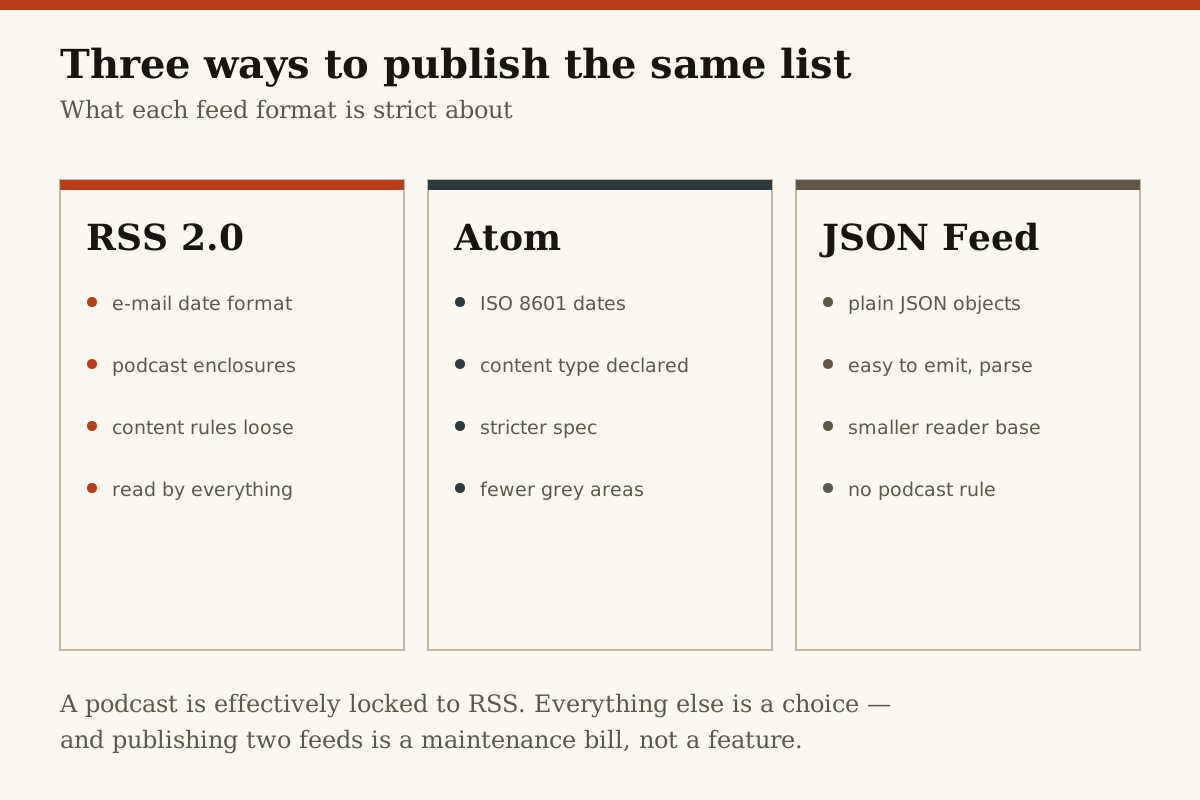
Parsers and migrations usually break over dates, time zones and identifiers. RSS uses pubDate for publication and specifies RFC 822 date format. Atom requires id, title, and updated dates on both feed and post — these date-time values must be RFC 3339-style, including the timezone offset. JSON Feed has its own rules, but also references RFC 3339-style date intervention.
CONTENT MARKUP AND EXTENSIONS
Atom supports linked content and extensions through XML namespaces, allowing extension elements in foreign namespaces. RSS provides media enclosure support through enclosure elements. JSON Feed has attachments arrays for podcasts and media, but lacks a formal extension mechanism like Atom.
The new kid on the block goes a different route, with JSON data embedded in HTML or plain text post bodies, but there's ].
PODCAST FEEDS
RSS is the go-to markup for podcasts. But Atom does support media enrichment — if you have an exclusive audience that uses Atom-based readers, consider publishing Atom feeds for those disproportionately.
JSON Feed lacks the podcast feature tagging that RSS and Atom provide. If you are looking to handle podcast enclosures, you will need look beyond JSON Feed — podcast apps are RSS-only.
WHAT READERS PARSE CLEANLY
Workflow support among popular feed generators, hosting platforms and readers depends on the context, and the nuanced understanding of what "support" means:
-
- Some reading platforms have patches in their issue trackers supporting JSON Feed;
But as one source on android development puts it:
It is one thing for a feed generator to output correctly through a feed processor. It is another for a real person with an RSS reader to parse it through that feed processor and reliably see the same thing a user sees.
[TO VERIFY: A strong primary-source comparison of support among major U.S. and UK players; Validate JSON Feed support against its developer documentation.]
ONE FEED OR TWO
If you can reliably generate your target format, and a mainstream player like Apple, Samsung, or Wordpress supports it, Then you can confidently publish that one format.
But if your stack breaks any of the exterior boundaries in parsing, or if — from user monitoring and surveying — you are aware of a major portion of your audience requiring a particular feed, Then you may need to either improve your feed generation stack, or add a second feed. With the caveat that dual publishing does fragment your efforts, especially if there is ever a need to migrate both.
More in Publishing