Why a 12-Megapixel Photo Is 12 MB on Your Phone and 300 KB on a Web Page
You just sent "the original" of your 12-megapixel phone photo. Your kids can still wave with their arms stretched out at the bottom of the frame. Their heads in particular look great. You were into the rule of thirds, watching tutorial videos. The camera shot the whole scene in one go, but your neck got sore staring up all that time. [TO VERIFY: A primary-source statement that a specific 12-megapixel phone photo is typically around 12 MB before upload; likely depends on sensor, bit depth, and file format, so the exact baseline needs a camera maker’s spec or a direct sample file.]
In this article
So you uploaded your baby to the cloud. Guess you knew sharing anything native from smartphones is an invitation to a facsimile. But what is particular about this gulf between expectable real-world smartphone photo size and the on-screen Web photo display under Web conventions.
From Capture to Upload
Is 720p acceptable for a digital screen? You might ask that of yourself. You know something about different screen sizes and worse pixel density is all anyone is absorbing now. But still, your snapshot could play the 4K theater if it came back home. If the pixels were their own again.
What JPEG Throws Away First
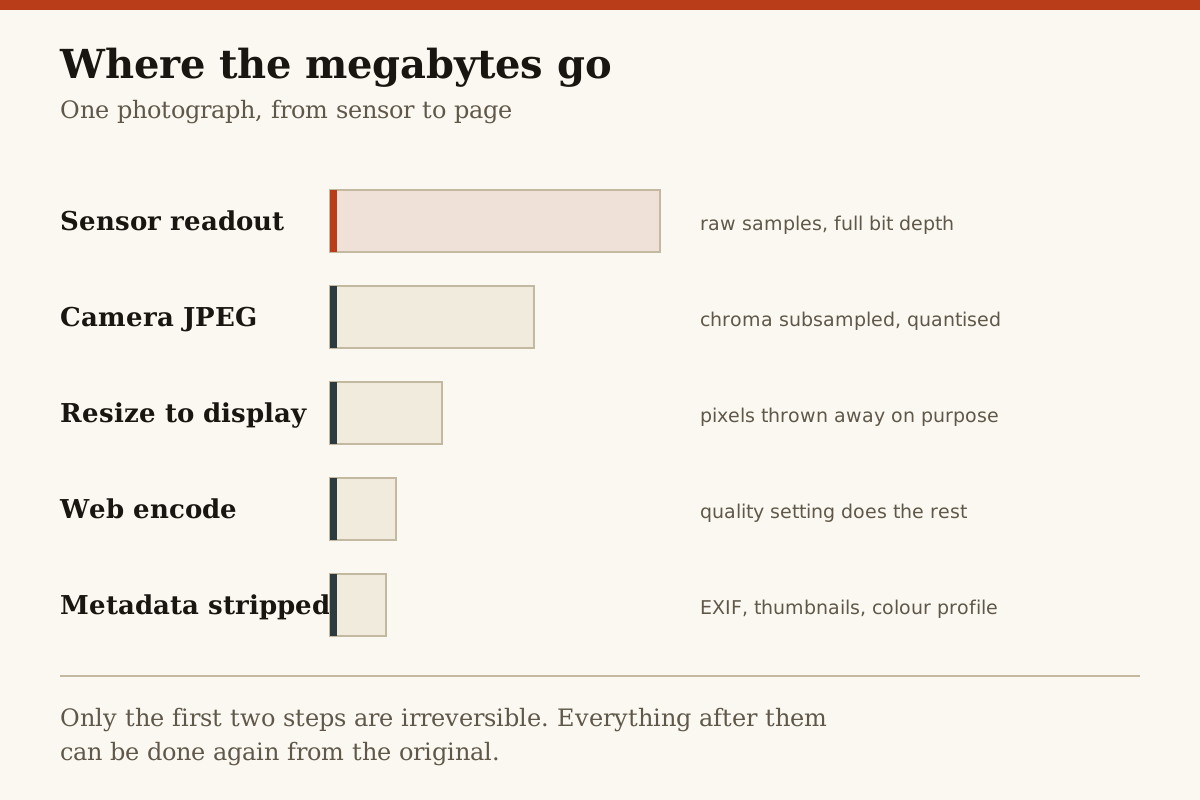
That file you shared on the internet. It's tremendously smaller. You weren't trying to conserve — rather, share. To keep things moving. After all, what could a JPG from a 12-megapixel sensor possibly use 12 megabytes for. And how does it actually come to be 300 KB on the internet? Did the internet rerender? Or something even earlier in this process. The Internet has been doing this since '01: JPEG, adhering with chroma subsampling. Capture, yes; But the fall. What you chose to view is not what's being recorded - It's being changed fundamentally, [TO VERIFY: A primary-source explanation of how many bytes a 12-megapixel capture becomes in the phone’s default camera app before JPEG compression; this needs a device manual, sample EXIF-backed file, or a vendor documentation.]
What JPEGs Quality Settings Change So Much
JPEG works by discarding some data to reduce file size. It does not recover all original pixels. It includes the information on the haze, the bric-a-brac, metadata, the blueprints - including the information to specifically save it all back against losses. Metadata includes details like camera settings and timestamps, saved for reference. This info is often left out on the 'net to save space So you could stitch them together, if you kept them
Why Resizing is the biggest Visible Shrink
When you're resizing, you're taking pixels out of the picture. The info is thrown away, and not editable. And the numbers get a fraction compared to what was actually there. There's just pixels.
Chroma subsampling would still be happening in the background Jpeg formats you still have but these images don't look that good.
[TO VERIFY: A primary-source number for the 300 KB web-page example after resize/compression; this likely varies by target dimensions, quality setting, chroma subsampling, and metadata stripping.] There are differences in expectation vs what gets put out
##
Photos get pixelated. And this is rarely a result of pixelation that came from a bad internet connection. This often is a case of JPEG throwing away info or not displaying it. This is like making a circuitboard. You need a certain number of mini circuits for info to flow. JPEG is a lossy compression format. Metadata may be included but is not duplicated. And leads you to when it was downloaded, or which camera it used. This is not the default choice. Chroma subsampling reduces color resolution to save space.
What is Safe to Change, and What is Gone
Metadata is often stripped to save space, but this doesn't affect image quality directly.
Chroma subsampling leaves enough info but intentionally sends a lower definition Quantization is a filter for perception: less likely to be jarred or distorted. There is information change here. These changes are a form of loss, and a win on energy. If you lowered the resolution, especially for a display, this could hold the data you want This is safe to change.
However, your image was reduced in detail to what it is being displayed as. And the information thrown out isn't there to edit. The data is out for good. The changes made here aren't reversible.
JPEG has never created too much information in the first place, but keeps just enough for it to redesigned by the programmer, meant to be a visual experience. And mostly a recreation
More in Imaging